


Supermarket Idle: Simulator
Apps Mobile Games
I approached Supermarket Idle: Simulator as a quick test of whether a supermarket management game can make short breaks feel satisfying without demanding constant attention. It is a free simulation game from Apps Mobile Games, built around the simple idea of starting with a small shop and gradually turning it into a larger business. That premise is familiar, but the real question is whether its routine remains enjoyable after the first few upgrades.
My answer is cautiously positive. The game is easy to understand, comfortable for casual sessions, and a reasonable choice if you like watching a business grow through repeated improvements. It is less suitable if you want a detailed retail-management simulation with deep staffing, supply-chain planning, or a highly demanding economy. I would describe it as a relaxed idle experience first and a serious supermarket simulator second.
How I judged the supermarket experience
When I review an idle management game, I do not judge it only by how quickly the first rewards appear. I look at whether the early tasks teach the main loop clearly, whether upgrades feel connected to the shop’s progress, and whether returning after a break feels worthwhile rather than obligatory. I also pay attention to how much control the player actually has. Some games use the word “manager” while reducing the player to tapping a single button, so the difference between meaningful choices and decoration matters.
This game presents itself as a supermarket-worker-to-manager journey. That gives the progression a useful sense of direction: you are not simply collecting abstract coins, but imagining a shop becoming more capable over time. The appeal comes from the rhythm of improving a business, checking its progress, and deciding where your next effort should go. It is a good fit for players who enjoy visible growth more than complicated rules.
The game is free to start, with optional in-app purchases ranging from $1.99 to $99.99 per item. That wide range is worth keeping in mind before playing for a long period. A free entry point makes it easy to try, but players who dislike purchase prompts or who prefer a completely fixed-cost experience should approach idle games carefully. I would begin without spending anything and decide only after seeing whether the ordinary progression already feels rewarding.
Related News






What the first sessions communicate well
The strongest part of the concept is its immediate readability. A supermarket is an easy setting to understand: customers need products, the store needs attention, and improvements should make the operation more successful. That clarity is valuable on a phone because I can open the game for a short session without first remembering a complicated set of systems.
For a newcomer to management games, this makes the title approachable. You do not need prior knowledge of tycoon games to understand why an improved shop is better than a neglected one. The progression also gives casual players a reason to check back. Even when I only have a few minutes, the idea of making one useful improvement is enough to create a small, satisfying objective.
There is a practical advantage here for people who play in fragmented moments. I can imagine using it while waiting for an appointment, during a commute as a passenger, or at the end of a workday when I want something interactive but not mentally exhausting. It does not ask me to learn a large rulebook before I can enjoy the setting. That low barrier is one of its clearest strengths.
Gallery
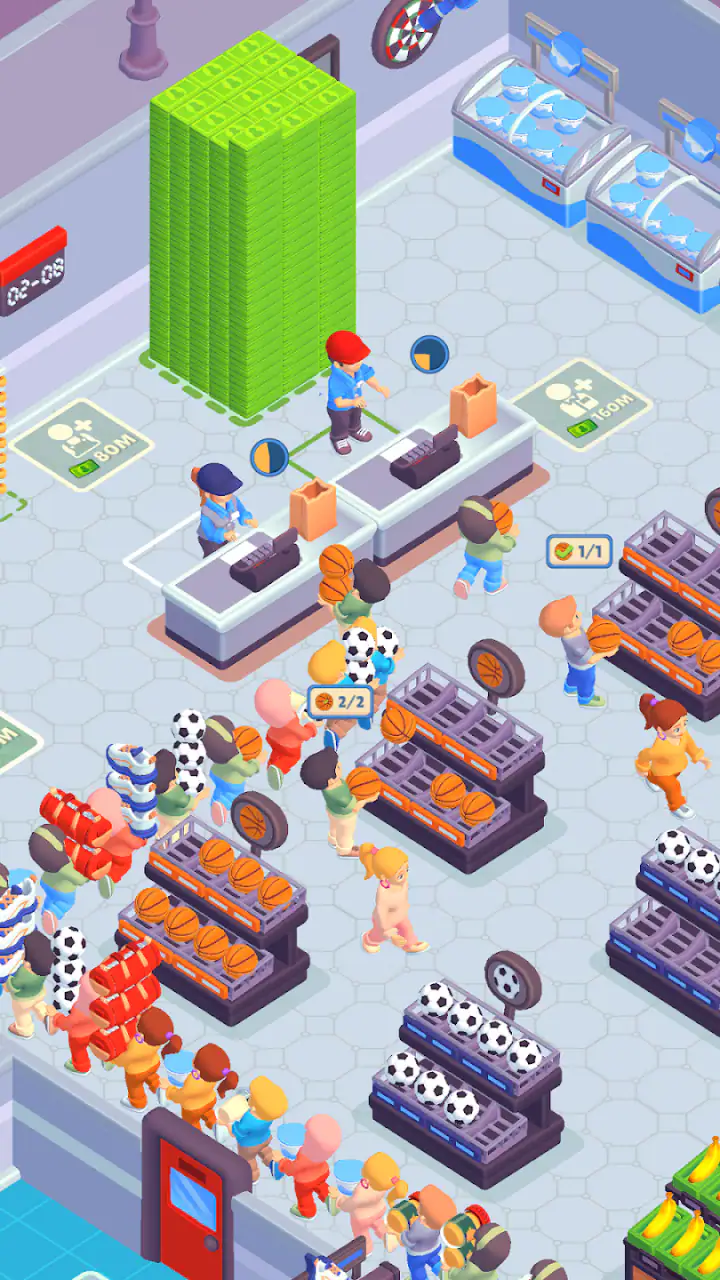
The decisions that matter during a short session
The most useful way to play is to treat each visit as a tiny management review rather than tapping every available action immediately. I first check what improvement appears closest to completion, then consider whether the next step supports the general growth of the shop or merely produces a temporary reward. This habit makes the game feel more deliberate and prevents the session from becoming a mechanical sequence.
One non-obvious tip is to set a stopping point before beginning. Idle games can encourage repeated checking because every return promises another small gain. I find the experience more pleasant when I decide that I will make one or two sensible upgrades and then leave. This turns the game into a controlled break instead of an endless background obligation.
A second useful approach is to judge progress by consistency rather than by the biggest single reward. If you focus only on the most dramatic improvement, smaller steps can feel pointless. In a supermarket setting, however, steady development is part of the fantasy. I prefer choosing an upgrade that keeps the shop moving smoothly over chasing a flashy result that does not change how I want to play.
A third insight is that the game works best when I accept its idle pacing instead of fighting it. Players who constantly search for a faster route may find the loop slow or repetitive. Players who enjoy checking a developing project, making a small decision, and leaving it alone for a while are more likely to appreciate the structure. That is a meaningful trade-off, not a flaw that affects everyone equally.
Where Supermarket Idle feels strongest
The game’s main advantage is its combination of a familiar setting and a low-pressure format. Many management games become difficult because they ask the player to balance several systems at once. Here, the supermarket theme gives the progress a concrete identity while the idle structure keeps the workload manageable. I can enjoy the sense of being responsible for a growing shop without needing to treat every session like a planning exercise.
That makes it especially appealing to three kinds of players. First, it suits people who like idle tycoon games but want a setting that is instantly understandable. Second, it works for casual players who prefer progress in small pieces. Third, it can be a gentle introduction for someone who has never tried a business simulation and does not want to begin with a complex economic model.
The age classification is Everyone, which matches the accessible presentation and broad premise. I would still recommend that families consider how they handle optional purchases, particularly because the available purchase range includes both small and much larger amounts. The game may be suitable for a wide audience, but spending decisions should remain separate from the simple appeal of improving the shop.
The public response also suggests that the game has found an audience: it holds a 4.4 average from around 15 thousand ratings, with more than 500 thousand installs. Those figures do not replace personal experience, but they do make the game easier to consider as an established casual option rather than an obscure experiment. I see that reception as consistent with its straightforward, approachable design.
Why the theme helps the idle formula
A supermarket gives progression a natural visual and emotional frame. In a less tangible idle game, increasing a number can quickly feel empty. Here, the idea of expanding a shop creates a simple story: the business begins modestly, the player takes responsibility, and each improvement moves it toward a larger operation. Even without deep simulation, that framing can make routine progress feel more personal.
I also like that the theme leaves room for different play styles. Someone can approach it as a relaxing collection of small tasks, while another player can think more like an owner and plan which improvements deserve attention first. The game does not need to become a spreadsheet to support that difference. Its strength is giving players just enough context to make progress feel intentional.
For me, the best everyday scenario is a ten-minute evening session. I open the game after finishing other tasks, review the shop, make a measured improvement, and stop before the process becomes repetitive. That routine feels more satisfying than leaving the game running mentally all day. The supermarket theme makes the session feel like checking on a project rather than merely harvesting a timer.
What may limit the long-term appeal
The same simplicity that makes the game welcoming can also limit it. If you expect detailed employee management, complex inventory decisions, changing customer behavior, or a demanding financial model, this may feel too light. The store summary promises the fantasy of working as a supermarket employee and manager, but players should not automatically interpret that as a full professional retail simulation.
Idle progression can also become repetitive when the central action remains similar over time. I would not choose this game for intense variety or constant surprises. Its pleasure comes from gradual improvement, so anyone who needs frequent mechanical changes may lose interest once the novelty of the supermarket setting fades.
There is also a psychological limitation that affects this whole category: the temptation to measure enjoyment by speed. If the game encourages you to think that every delay is wasted time, the relaxing structure can start to feel like a chore. My advice is to play it as a background-friendly hobby, not as a competition against the game’s timers. If that mindset does not appeal to you, a more active simulation may be a better choice.
When another type of game may suit you better
The right alternative depends on what you want from the word “simulation.” If you want a calm growth loop with minimal pressure, this game is a sensible candidate. If you want to design a store layout, control detailed logistics, or respond to complicated market conditions, you should look toward a deeper tycoon or management game instead. I am not saying one approach is superior; they simply reward different kinds of attention.
Players who prefer direct action may also be happier with a supermarket game focused on serving customers in real time. That style gives immediate feedback and usually demands quicker reactions. Supermarket Idle: Simulator is better for someone who enjoys stepping back and watching a business develop. It is not the most natural choice for a player who wants every minute to involve active movement or urgent decisions.
There is a similar distinction with story-driven games. A narrative game can offer characters, dialogue, and a stronger sense of authored progression. This title’s appeal is more about ownership and accumulation. If you want to become emotionally attached to a cast of characters, a story-focused alternative may provide more depth. If you want the satisfaction of returning to a shop and seeing its business journey continue, this game has the clearer fit.
The cost of switching between these categories is mainly a change in expectations. Moving from this game to a detailed management title means accepting more menus, more consequences, and a greater need to plan. Moving in the other direction means giving up some control in exchange for convenience. I would make that choice based on how much mental energy I want to spend, not on which game uses the more impressive label.
How purchases affect the decision
Because the game is free, trying it is straightforward. I would not spend money during the opening sessions simply to make the shop grow faster. First, I would test whether the ordinary loop is enjoyable when progress moves at its intended pace. If the basic routine already feels satisfying, an optional purchase may be easier to evaluate as convenience rather than a requirement for enjoyment.
The presence of items priced from $1.99 up to $99.99 means different players can encounter very different spending decisions. That does not automatically make the game poor value, but it does make self-control part of the experience. I would recommend setting a personal limit before buying anything and remembering that faster progress can shorten the period in which the gradual-growth loop feels rewarding.
This is particularly important for younger players, even with an Everyone age classification. The accessible theme can make the game feel harmless, while purchase choices still involve real money. Families should decide who controls purchases before handing over the device. For adults, the same principle applies: treat optional items as a convenience, not as proof that the game must be accelerated.
Device and release details worth checking
The current version is 1.02.14, and the game requires at least iOS or Android version 12. That requirement is not especially demanding for many recent devices, but it is still worth checking before trying to install it on an older phone or tablet. A game that looks suitable for casual play is not useful if the device cannot run the required operating-system version.
The game was released on January 8, 2026, so I would keep expectations realistic about its place in the category. A relatively recent release can be appealing if you want to follow a developing product, but it can also mean that long-term depth should be judged by what is enjoyable now rather than assumed from the premise. I would focus on the current loop and avoid buying anything based on hopes about future additions.
Apps Mobile Games keeps the identity of the experience focused on a familiar business fantasy. That is helpful for deciding quickly whether it matches your taste. You are not choosing it because of a complicated genre blend; you are choosing it because the idea of building a supermarket through idle progress sounds relaxing and rewarding.
My recommendation after weighing the trade-offs
I recommend Supermarket Idle: Simulator to players who want a gentle supermarket management game for short, repeatable sessions. Its free entry point, Everyone classification, and clear business-growth premise make it approachable. I especially see it fitting someone who likes checking progress during spare moments and prefers simple decisions over detailed economic planning.
I would skip it if your priority is deep control. Players looking for a demanding retail simulation, a rich story, or constant action will probably find a better match elsewhere. The game’s value depends on enjoying gradual progress, and no amount of attractive presentation can change that basic design choice. If you already know that idle loops feel repetitive to you, this is unlikely to reverse your opinion.
My final advice is to try it with a deliberate routine: play for a few short sessions, make upgrades without rushing, and notice whether the shop’s growth feels satisfying at its normal pace. Do not judge it only by how quickly you can advance, and do not spend until you know the basic loop works for you. The best reason to keep playing is the calm satisfaction of improving a small business, not the pressure to make every number rise faster.
For that audience, I think the game earns a recommendation. It does not aim to replace a full-scale management simulator, and it should not be judged as one. Instead, it offers a friendly, low-commitment way to enjoy the supermarket-tycoon idea. In my experience, that focused simplicity is both its greatest strength and the clearest boundary of what it can provide.
FAQs for Supermarket Idle: Simulator
What is Supermarket Idle: Simulator?
Supermarket Idle: Simulator is a casual management game in which you build, organize, and expand your own supermarket. You typically begin with a small store and gradually improve it by adding shelves, stocking products, serving customers, and upgrading different areas. Its idle mechanics allow the business to continue generating progress and income even when you are not actively playing.
How does the gameplay work in Supermarket Idle: Simulator?
The main gameplay focuses on managing supermarket operations rather than controlling a character directly. You use earnings to unlock new products, improve displays, expand the shop, and increase customer satisfaction. As the store grows, more shoppers arrive and the management tasks become more varied. The simple controls make it accessible, although progress is designed around repeated upgrades and gradual development.
Can Supermarket Idle: Simulator be played offline?
Some parts of Supermarket Idle: Simulator may be available without a constant internet connection, particularly basic store management and previously unlocked content. However, online access may be required for advertisements, cloud saving, special rewards, updates, or in-app purchase verification. Availability can differ between Android and iOS versions, so it is best to check the game’s store description before relying on offline play.
Does Supermarket Idle: Simulator contain advertisements or in-app purchases?
The game may include optional advertisements and in-app purchases, as is common with free-to-download idle management games. Ads can sometimes provide bonuses such as extra currency, faster progress, or temporary boosts, while purchases may remove waiting periods or unlock additional resources. You can usually play without spending money, but progressing quickly may require watching ads or being patient.
Is Supermarket Idle: Simulator suitable for children and casual players?
Supermarket Idle: Simulator is generally suitable for casual players who enjoy relaxed tycoon, simulation, and incremental upgrade games. The mechanics are easy to understand, with straightforward objectives and limited controls. Parents should still review the listed age rating and check advertising and purchase settings, because the game may present optional ads or payment prompts depending on the device and regional version.
Pros
- Simple controls make it easy to start playing immediately.
- Store upgrades create a satisfying sense of steady progress.
- Short sessions work well for casual play on mobile.
- Visual feedback makes completed tasks feel rewarding.
- The supermarket theme offers a relaxed alternative to action games.
Cons
- Progress can slow noticeably as upgrade costs increase.
- Repetitive tasks may become dull after extended play.
- Limited strategic depth may disappoint experienced simulation fans.
- Some features may depend heavily on watching optional ads.
- The game can feel focused more on expansion than detailed management.


